Transforming Food Systems Starts From Within: A New Era of Conscious Leadership

The way we grow, produce and consume food is deeply fractured. Our food systems are responsible for one-third of global greenhouse gas emissions, around 80% of deforestation, and are linked to the 2.3 billion people experiencing food insecurity today.
For decades, our food systems have been shaped by a singular focus: producing cheap, readily available food through a highly processed model. Fuelled by population growth and synthetic inputs, we’ve prioritised yield above all else.
The result? Diets have become unhealthier, supply chains have stretched, and food has become increasingly disconnected from people and place.
We now know this model is pushing us beyond Earth’s ecological limits. And while policymakers are increasingly recognising that food systems sit at the intersection of climate, biodiversity, health and development, progress still isn’t happening fast enough.
That’s what’s led me to this moment of reflection – asking myself why the food systems crisis persists despite growing momentum.
The missing dimension? Looking within
Many of today’s challenges are underpinned by dominant beliefs – prioritising endless growth, valuing productivity over care, and reinforcing disconnection between people and nature. As we continue pushing for policy change without addressing these root causes of our crises, we risk reinforcing the very systems we are trying to change.
How can we break free from this cycle?
The scale of the challenge can feel overwhelming. Structural inequalities – from the legacies of colonialism to entrenched corporate power and its influence on politics – are complex and deeply embedded. But systems transformation is still possible if we create the internal (as well as external) conditions for it.
This is where the idea of “conscious transformation” comes in – a fundamental shift in how people relate to themselves, each other, and the planet. It asks us to reflect on how our own perspectives, values and ways of relating shape the systems we’re trying to change.
This way of thinking isn’t something modern society has invented – the concept of “consciousness” has been used for millennia by societies who have viewed the world through lenses of philosophy, internal experience or meditation. But what feels new is the growing recognition that these perspectives may have a vital role to play in how we can solve today’s climate, food and nature related challenges.
At first, this can feel abstract. But in practice, it might look like:
- taking time to truly listen to perspectives that challenge our own
- recognising how our assumptions shape the solutions we prioritise e.g. notions of productivity and economic value over wellbeing
- making space to connect to ourselves, others and the world through practical methods like meditation
- nurturing more collaborative and less adversarial ways of working between groups
These aren’t just soft skills on the sidelines – they’re foundational to enabling real, lasting change.
Why this matters now for food systems
1. Complexity demands a different kind of leadership
Momentum for food systems transformation has grown amidst an increasingly volatile global context. Countries are faced with interconnected challenges, including war, economic pressures, climate change, inequalities and political turbulence – all of which undermine food security.
Navigating this complexity requires more than technical expertise. It calls for leaders who can work across perspectives, embrace uncertainty, and engage with diverse knowledge systems, including Indigenous and place-based approaches that have historically centred balance with nature.
2. Collaboration depends on connection
Across food systems, there’s a growing sense of disconnection. As we’ve become increasingly distant from the origins of what we eat, being conscious of the moral and environmental implications of our food has become challenging, while frustration and urgency can make it harder to empathise with different groups’ constraints and viewpoints.
Conscious approaches can help rebuild connection – encouraging deeper listening, empathy and trust. This creates the conditions for more effective collaboration between groups, from farmers and environmentalists to policymakers and activists.
3. Regeneration requires a mindset shift
Finally, transforming food systems means moving beyond business-as-usual mindsets. For decades, dominant models have prioritised extraction, efficiency and short-term profit.
A conscious approach calls for a different paradigm – one centred on resilience, wellbeing and long-term sustainability. Some regions have already started to develop these shifts, such as the philosophy of “Buen Vivir” or “Living Well” that’s been embedded in the Constitutions of Ecuador and Bolivia and expresses a worldview based on cultural diversity, collective wellbeing and harmony with nature.
As Robin Wall Kimmerer so eloquently describes in her book Braiding Sweetgrass – “Even a wounded world is feeding us. Even a wounded world holds us, giving us moments of wonder and joy. I choose joy over despair. Not because I have my head in the sand, but because joy is what the earth gives me daily and I must return the gift.”.
The Conscious Food Systems Alliance – and why it matters to us
As part of this journey towards cultivating a more conscious approach to systems change, Greenhouse has joined the Conscious Food Systems Alliance (CoFSA), a UNDP-convened initiative focused on building the inner capacities needed for transformation.
For me, this feels like an opportunity to explore a dimension of the food systems and climate transition that doesn’t always get the attention it deserves. Through CoFSA, and the leadership course I’ve just began, I’m looking forward to learning how more reflective, values-led approaches can strengthen the way we work, both internally and with our partners.
As an employee-owned organisation, Greenhouse has a unique chance to shape not just what we do, but how we do it. This feels like a natural next step in that evolution.
Looking ahead
Joining CoFSA is just one step in a much broader journey. Transformation doesn’t just happen at the global level, it also starts with small shifts in individual awareness.
But what excites me is exactly this – the possibility that we all have a chance to reconsider our relationship with the world around us through a daily practice.
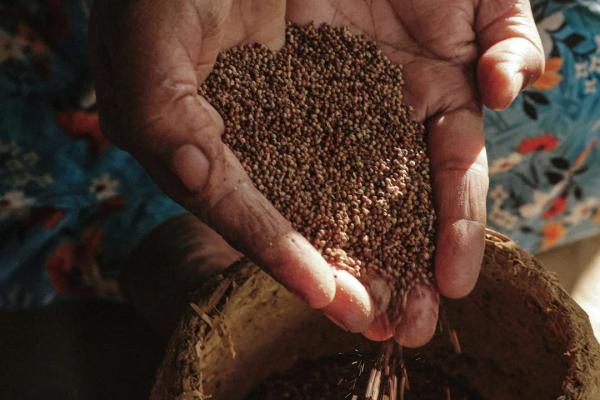
So the next time you sit down to eat, if you are fortunate enough to, why not take a moment to consider your food’s journey…from the awakening of the seed, to the hands that grew it and the systems that delivered it.
Because transforming food systems isn’t just about changing what we do, it’s about changing how we see, think and relate to the world.
If you connect with this approach to food systems transformation, we’d love to hear from you at Greenhouse. Get in touch with us to explore how we can drive change together through conscious collaboration.