
Aligning global momentum around regenerative school meals for climate resilience
Food and Agriculture Infrastructure Lifestyle PolicyThe Rockefeller Foundation
Sector and focus area
Philanthropy, food systems, climate resilience, public policy
Context and challenge
School meal programmes are often viewed narrowly as a social protection or education intervention. This framing can limit political ambition and investment, despite their potential to contribute to climate resilience, nutrition security and national development.
At the same time, regenerative agriculture is increasingly recognised for its role in building resilient food systems, but its integration into public food procurement remains uneven. There was a clear opportunity to connect these agendas and to build shared understanding across governments, philanthropy, civil society and the private sector.
The challenge was to shift how school meals are understood and discussed, and to create the conditions for coordinated action across sectors and geographies.
Approach and strategy
Greenhouse supported the Rockefeller Foundation to position regenerative school meals as a strategic policy lever rather than a standalone programme.
The approach centred on convening and narrative-building, bringing together diverse global actors around a shared vision. This included:
- • Supporting a series of high-profile global convenings designed to align stakeholders on the role of regenerative school meals
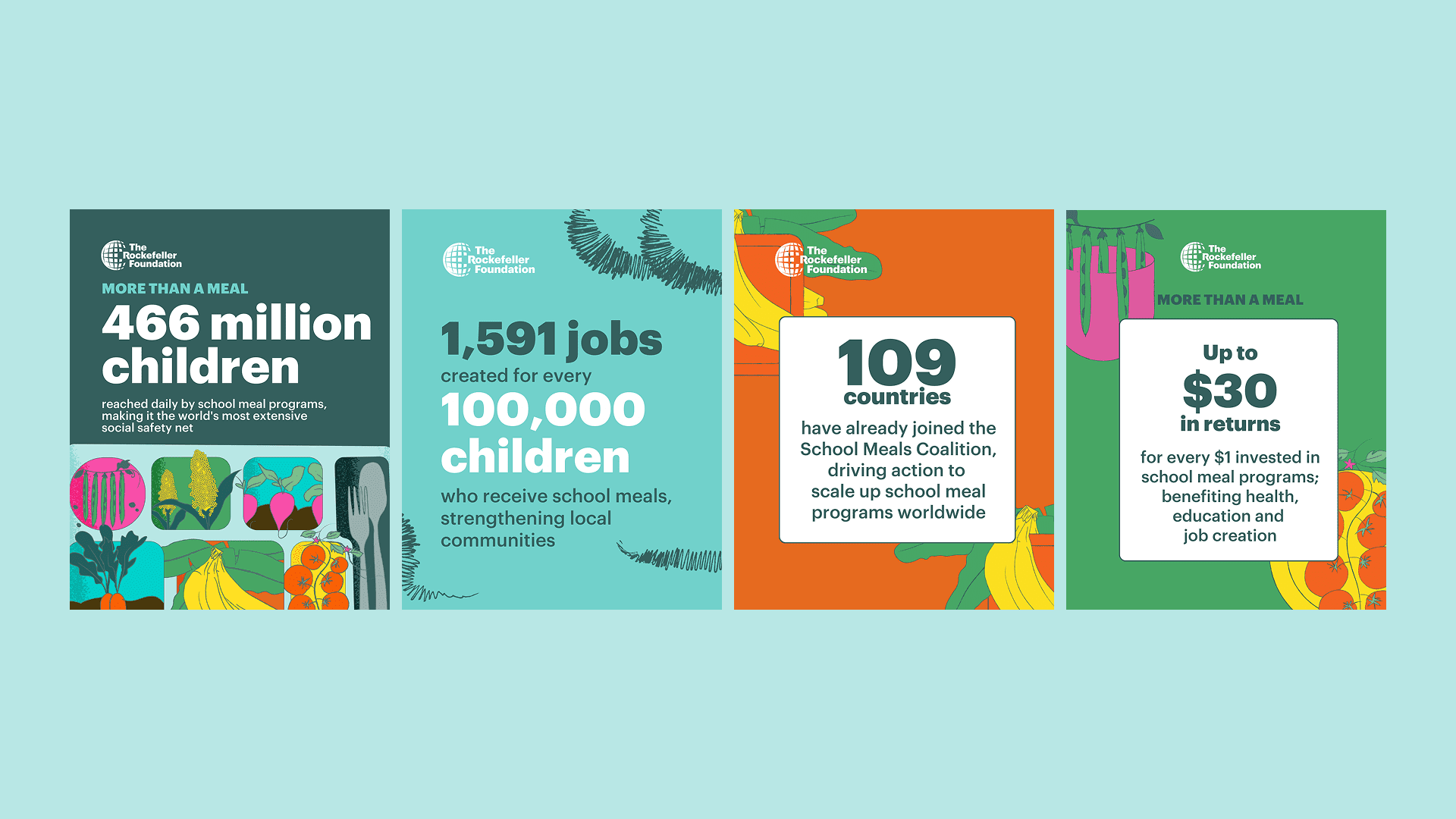
- • Developing clear messaging, visual identity and content that linked food systems, climate and development outcomes
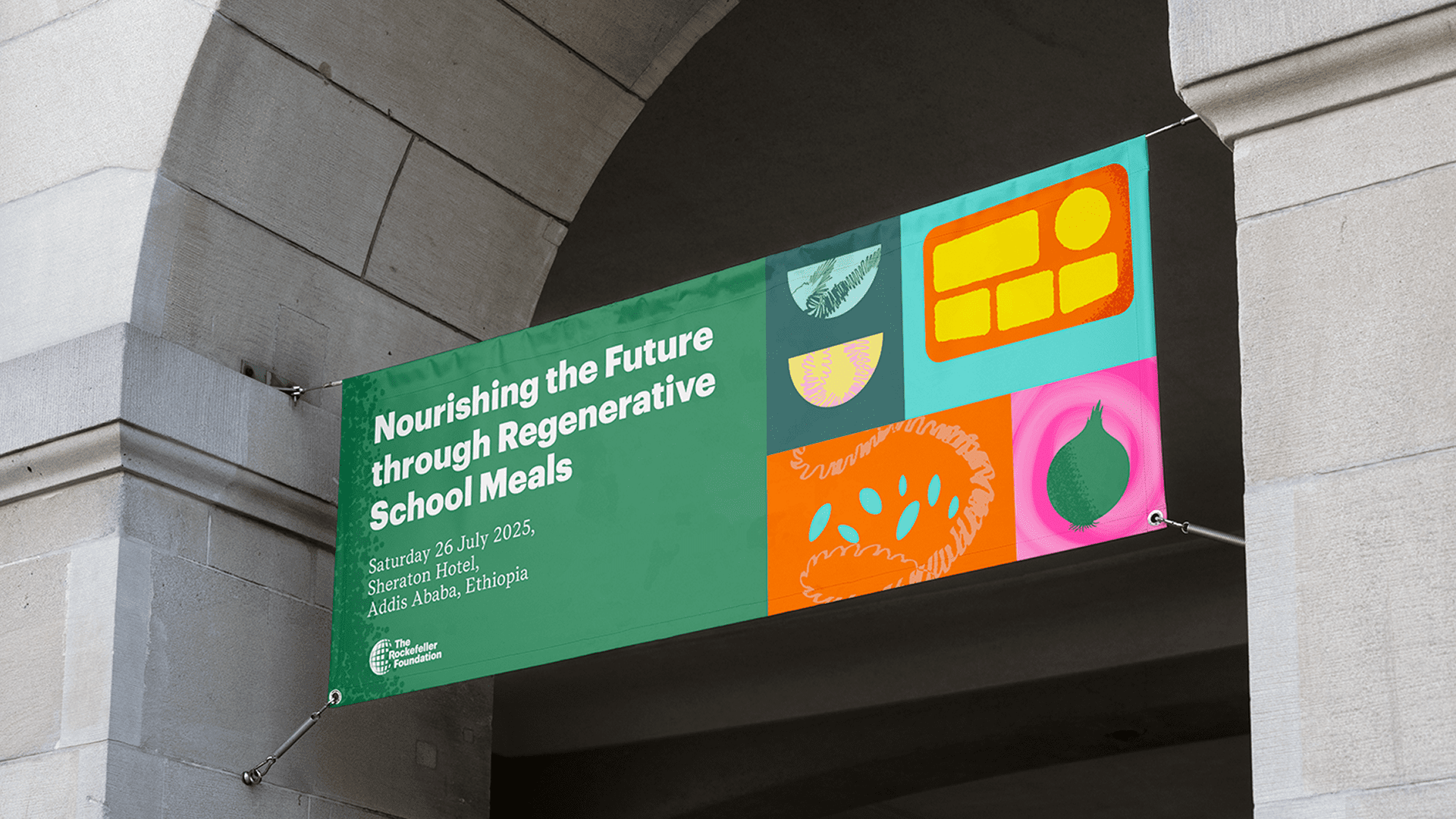
- • Providing end-to-end event support, including design, speaker briefings and collateral for flagship moments in Ethiopia, at Climate Week NYC and at COP30
- • Designing and amplifying partner research to strengthen the evidence base underpinning the narrative
The strategy focused on creating momentum that could travel beyond individual events and into policy conversations.
Work delivered
Greenhouse delivered integrated strategic and delivery support across convenings, communications and content.
This included shaping the core narrative and messaging framework, creating a coherent visual identity, and producing materials that could be used consistently across different global moments. Event support covered both substance and execution, helping speakers and partners articulate aligned messages while ensuring high-quality delivery in complex, high-profile environments.
Research produced by partners was supported and amplified to reinforce credibility and to anchor the narrative in evidence.
Outcomes and impact
The convenings successfully aligned a wide range of global actors around a shared vision for regenerative school meals.
Momentum generated through this work translated into policy influence, with governments from Brazil, France and Somalia publicly calling for the integration of regenerative school meals into national climate plans.
Participation data from the Addis Ababa convening indicates strong relationship-building outcomes:
Attendees
180global leaders attended the Addis Ababa convening
Connections
100%of participants reported making meaningful new connections
Action
98%of attendees felt inspired to take meaningful action
Why this work matters
By reframing school meals as a strategic tool for climate resilience and development, this work helped expand what is politically and practically possible within public food systems.
It demonstrates how convening, narrative and evidence can work together to unlock cross-sector alignment and policy momentum, particularly on complex, systemic issues that cut across climate, agriculture and social outcomes.