Earth Day 2026: Our Power, Our Planet

Since 1970, Earth Day has always unfolded against a shifting political backdrop. As support from political leaders has waxed and waned, it has remained a moment for reflection and a reminder that environmental progress depends not only on leaders, but on community action too.
More than ever, this Earth Day arrives at a time when our global systems feel as if they are faltering. The World Economic Forum’s 2026 Risk Report recently warned of a “vacuum in global governance”, and many of us are sensing the strain of crumbling multilateralism and institutions that no longer feel willing, or able, to serve their purpose.
And yet, while political polarisation intensifies, everyday actions of local organisers across the globe have become shining beacons of hope. If the institutions around us fail to deliver concrete change at the pace needed to protect our planet, we have a choice: feel despair, or find the courage to act.
The theme of Earth Day 2026 is Our Power, Our Planet – a timely reminder that environmental leadership doesn’t always come from the top down. From energy systems to farming, ocean protection to youth development, the actions of individual people are snowballing into deep drifts of change.
Across the world, communities, activists, organisers and local innovators are refusing to accept the conditions offered to them by slow-to-act politicians and corporate leadership. Instead, they are building more resilient futures by pushing for meaningful change on the issues that matter most.
In reflection of this year’s theme, the Greenhouse team has compiled an inspiring selection of people and projects, with each story sharing a reminder that the most powerful change often starts at the roots.
The Future of Food
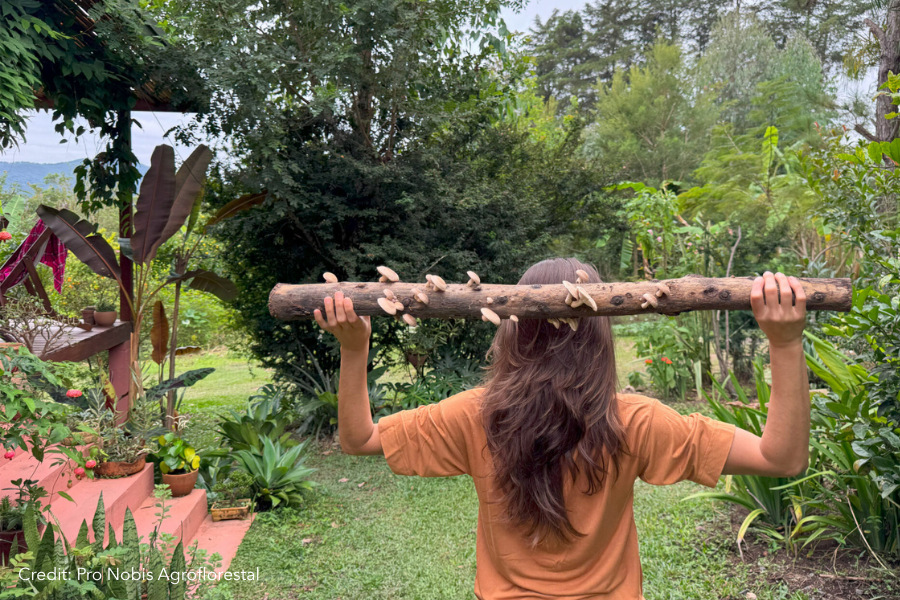
In the south of Brazil, Thales Mendonça and Karina Gonçalves David are a husband and wife running a small-scale farm together. They cultivate mushrooms – specifically shiitake, which they grow on logs, alongside vegetables and fruits in the forest. Using eucalyptus logs offers a simple solution, where food can be grown in the natural conditions of the native forest. As advocates for agroecological farming, they are committed to sharing their model worldwide bringing their community experience to the global stage, leading vital conversations at COP30 as part of the Action on Food Hub.
In a country so devastated by deforestation for farming, Thales and Karina’s work is absolutely essential in showing that food systems can exist in harmony with ecosystems rather than against them. Regenerative approaches can be scaled up across the globe, building towards a future where nutritious food is grown alongside the local environment and wildlife.
The Voice of the Ocean
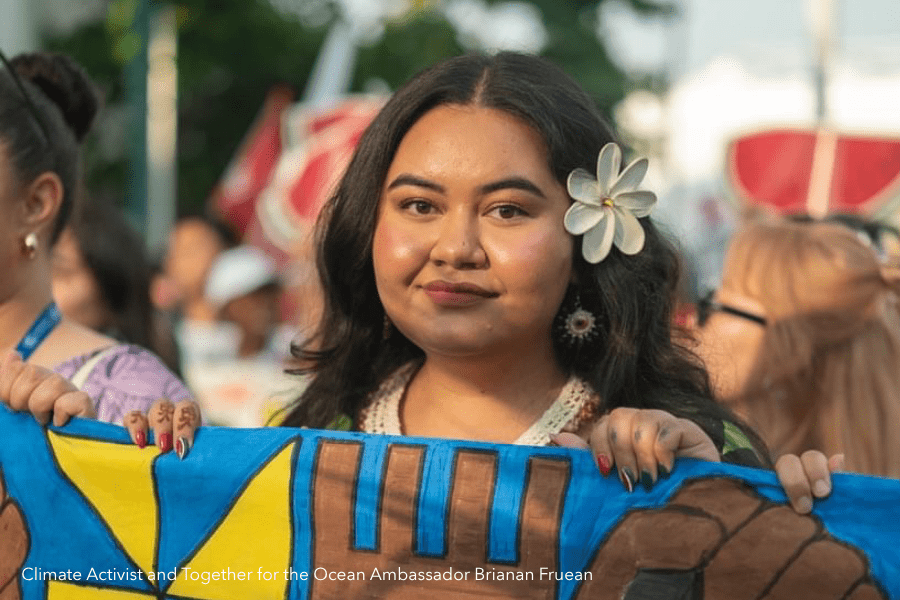
Thousands of miles across the ocean in Samoa, Pacific Islander Brianna Fruean has been involved in ocean activism since her teenage years. Having been raised alongside the ocean, protecting marine environments is an issue she sees as entirely interconnected with her own existence. As a member of the Pacific Climate Warriors and an ambassador for Together for the Ocean, she has travelled the world to share her story and push global leaders to bring Small Island Developing States to the forefront of the conversation at events like COP30 in Brazil and the UN Ocean Conference in Nice in 2025.
She has brought the issues facing her people to an international stage – from declining fishing stocks to rising sea levels, the Samoan people are suffering at the hands of extractive industries that push the earth beyond its limits. Brianna is a reminder of the power of local voices and lived experiences in delivering impactful communications.
Powered by Community
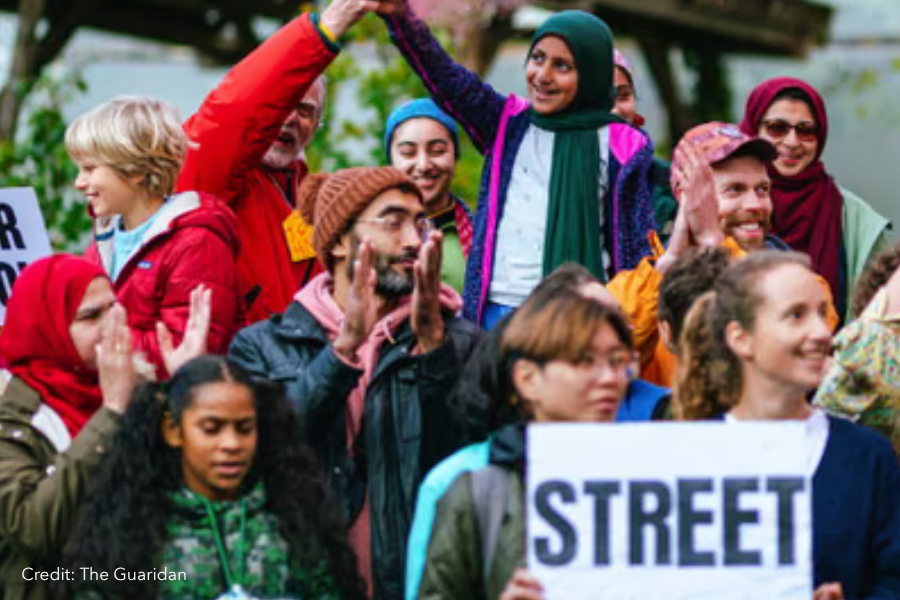
The same spirit of regeneration is showing up in cities. In Walthamstow, North London, one couple slept on their roof to raise money and awareness for their bold idea – a community power station, coordinating solar panels on every single roof on their street. While they encountered endless barriers from unconvinced residents, energy companies, and hard-to-reach landlords, they managed to install solar panels on 20 houses as well as five schools in the area. The couple co-produced a documentary, mostly shot on a handheld camera during lockdown, to share their story and inspire other communities to take action.
The couple have already noticed a 30% decrease in their energy bills, a statistic which will become even more valuable as energy costs are set to increase later this year. Climate action at a neighbourhood level, powered by renewable energy, can scale up to long-lasting, systemic change. While outdated systems may slow progress, the strongest solutions will always have community at the very heart.
Green Fingers, Green Cities
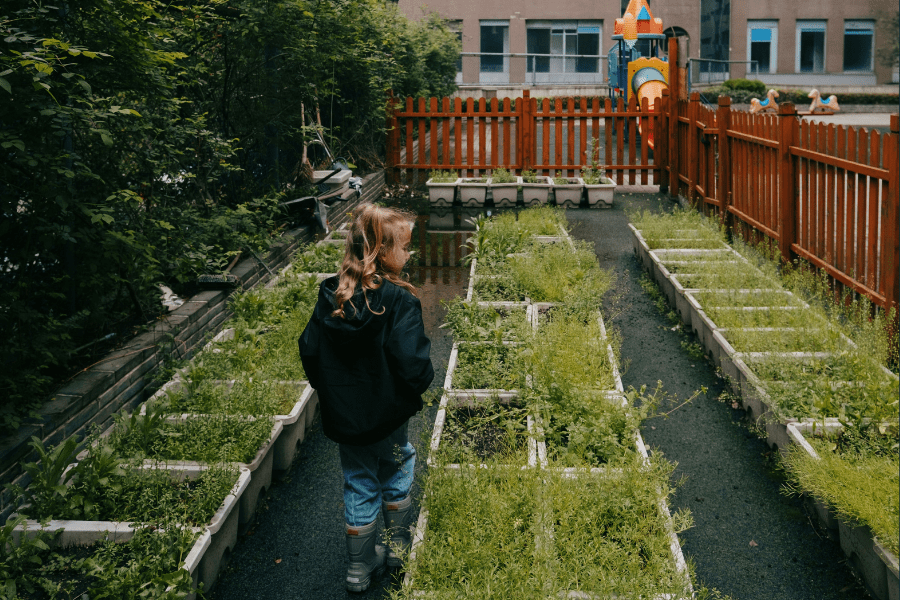
Further south in Brighton, abandoned wasteland is being repurposed by local residents to feed their families. Nawal Al Baraze grows around 70% of the vegetables that her family consumes – all on disused grassy banks near her block of flats and in a garden co-created by her community. With food prices already rising due to the conflict in the Middle East, local people are collaborating on reclaiming plots alongside office blocks and flats to grow vegetables for their families.
By transforming local green spaces in this way, not only are they ensuring that bellies remain full with nutritious food, but they are connecting with neighbours and building local networks. Community resilience is not coincidental – it is built through collective action.
Fair Finance
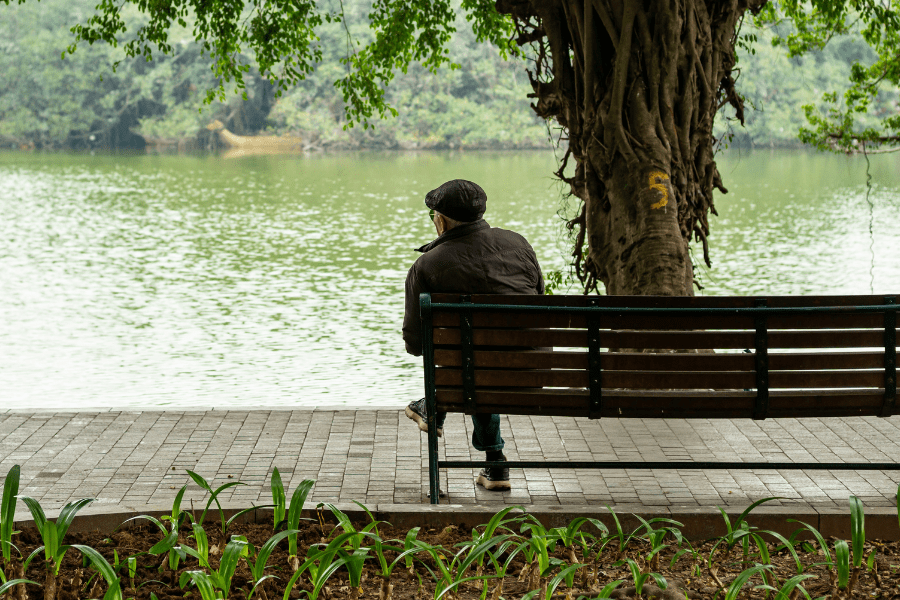
Across the world, there is a growing awareness that each penny we spend is a vote. A vote for a system, a mindset, an approach to treating the world around us.
Jane McCarthy withheld council payments for three years as a protest against her local authority’s investment in fossil fuels. Upon discovering that Buckinghamshire council invested in fossil fuels through its choice to bank with Barclays, she refused to pay her monthly bills, and was reported to have accrued £5,000 in debt in July 2025. Individual actions on banking and expenditure can scale up to systemic change – pensions in particular are reported to invest about £88 billion in fossil fuels.
Carefully considered approaches to ethical banking and pensions can ensure capital is invested in securing a more resilient future.
Planetary Health is Human Health

In Tanzania, Amplify Health & Development in Africa (ADHA) is working to build an empowered and climate-prepared future for the African continent. Youth and community health workers are collaborating to document how climate events impact primary healthcare services, reduce access to healthcare and exacerbate disease spread.
Through storybooks on climate and malaria prevention, youth training and community awareness events, ADHA is translating complex climate and public health risks into actionable messages. With closely targeted messages that are accessible to key audiences, they offer a scalable example of how vital change should be co-created by communities, for communities.
Fashioning Change
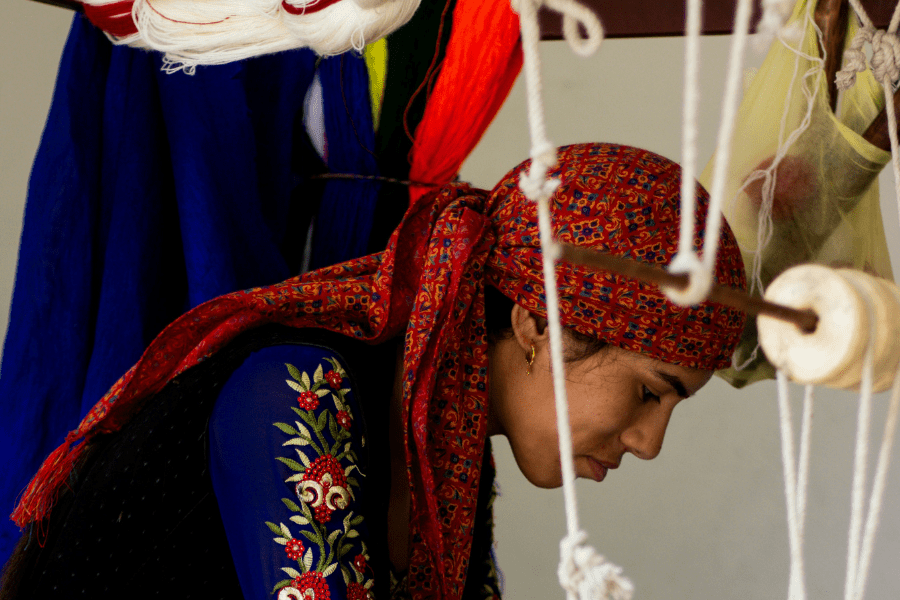
Sustainable Fashion Week is a coalition of sustainable fashion advocates running sustainable fashion events across the UK, with the 2025 iteration operating 34 hubs across Scotland, Northern Ireland, Wales and England. It aims to make sustainable fashion accessible through grassroots action, promoting re-wearing, regenerating and reconnecting with fashion.
Through community-led events like workshops, clothes swaps and exhibitions, they are offering an alternative model where style does not need to be synonymous with consumption. With the fashion industry widely cited as the second-largest polluter after the oil industry, empowering individuals to opt out of excessive fast fashion models can have a transformative impact, scaling up to society-wide shifts.
Collective Action, Collective Resilience
This diverse array of examples was selected by the Greenhouse team for their energising power to galvanise change. Being exposed to the challenges of multilateralism and the failings of international agreements can create apathy – a sense that hope is lost and resignation to defeat is our only option.
These examples show us that the opposite is true – grassroots climate action is booming across the globe, from the terraced streets of north London to the sandy coves of Samoa.
Together, small individual actions co-create a world that feels a little different. From installing solar panels to growing lettuces in a disused patch of scrubland – you may find that your costs decrease, but also that your sense of belonging flourishes. Each independent action harmoniously builds climate resilience and fortifies community.
Local action, stewardship, community resilience, imagination, and shared values scale up to create a new reality.
This Earth Day, we must all reflect on the planet we call home and the change we envision for her. ‘Our Power, Our Planet’ is a timely reminder that the first step in building a fairer, brighter future is imagining it. These examples are turning imagination into action – not only believing in a better future, but building it.
At Greenhouse, we are passionate about helping convert imagination into action. If you have a climate story that deserves wider attention then please get in touch.